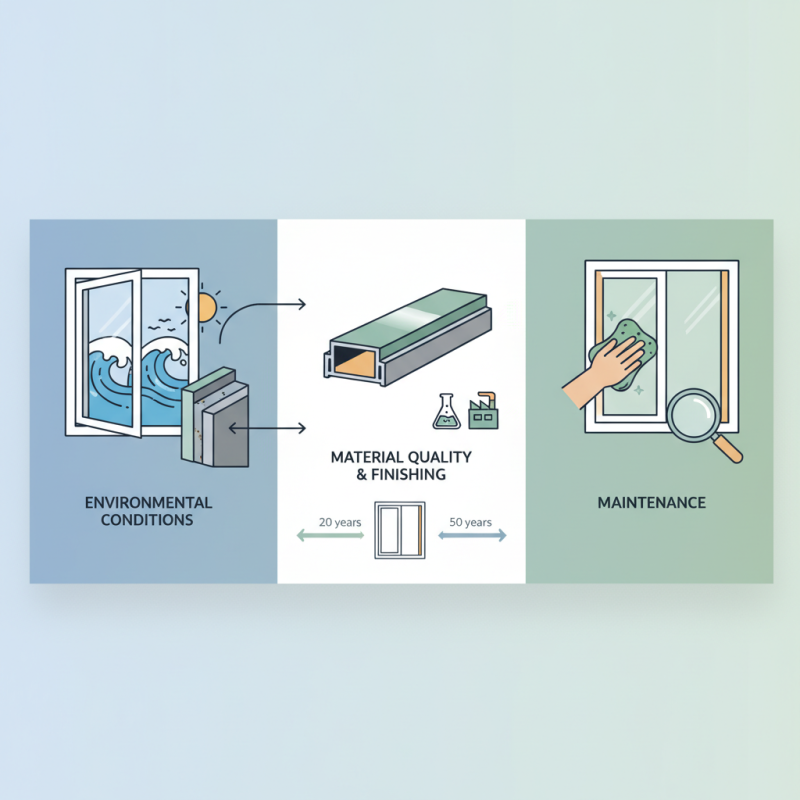
The durability of aluminum doors and windows is a significant aspect for construction and renovation projects. Numerous reports indicate that their lifespan can vary widely, often from 20 to 50 years. This variation raises an important question: What factors influence the service life of aluminum doors and windows? Understanding these factors is essential for homeowners and builders alike.
Exposure to environmental conditions plays a crucial role. For example, areas with high humidity and salty air can accelerate corrosion, leading to shorter lifespans. Additionally, the quality of the aluminum alloy and the finishing processes significantly impact durability. According to industry experts, well-anodized aluminum can resist wear and tear better than standard finishes.
Another important factor is maintenance. Regular cleaning and inspections can extend the service life. However, many homeowners overlook these tasks, leading to premature failure. Therefore, being aware of how material quality, environmental exposure, and maintenance influence lifespan is vital for making informed decisions about aluminum doors and windows. This knowledge can guide purchases and enhance the longevity of these fixtures in various settings.
The material quality of aluminum doors and windows significantly influences their lifespan. Factors like alloy composition, surface treatment, and manufacturing processes play a vital role. Aluminum alloys, such as 6063 and 6061, are common in construction. Reports suggest that 6063 offers better corrosion resistance while 6061 provides more strength. The right choice affects durability and performance over time.
Surface treatments, like anodizing and powder coating, enhance protection against environmental elements. Anodized aluminum shows superior resistance to corrosion and wear. Research from industry experts indicates that anodized surfaces can last up to 25 years before showing significant degradation. Conversely, lower-quality coatings may fade and peel within five years, highlighting the need for proper evaluation.
Manufacturing techniques also contribute to the quality of aluminum doors and windows. Precision in fabrication leads to a better fit and finish, reducing gaps that invite moisture. However, not all manufacturers adhere to high standards. Some may cut corners to reduce costs, impacting overall quality and lifespan. Continuous reflection on these factors is crucial for maximizing the longevity of aluminum installations.
| Factor | Description | Impact on Lifespan |
|---|---|---|
| Material Quality | The inherent properties of the aluminum alloy used, including strength and corrosion resistance. | High-quality alloys significantly extend lifespan. |
| Surface Treatment | Finish applied to the surface, such as anodization or powder coating, which protects against corrosion. | Effective treatments can double or triple lifespan. |
| Environmental Conditions | Exposure to harsh weather, such as UV radiation, saltwater, or industrial pollutants. | Extreme conditions can lead to premature degradation. |
| Maintenance Frequency | Regular cleaning and inspections to address wear and damage. | Consistent maintenance prolongs usage life. |
| Installation Quality | Proper installation techniques that ensure structural integrity and weatherproofing. | Incorrect installation can lead to early failure. |
: Alloy composition, surface treatment, and manufacturing processes greatly influence quality and lifespan.
Alloys like 6063 have better corrosion resistance, while 6061 offers enhanced strength. The choice matters.
Treatments like anodizing and powder coating protect against wear and environmental damage. Proper evaluation is needed.
Anodized surfaces can last up to 25 years with proper care. Lower-quality coatings may fail in five years.
Misalignment, improper sealing, and neglecting drainage can lead to leaks and corrosion.
Choose skilled professionals and pay attention to details. Small oversights can compromise integrity.
Yes, powder coating is robust but may require touch-ups. Anodizing offers durability but can be pricier.
Regular inspections are crucial. Address minor issues to prevent larger, costly repairs down the road.
Dry climates may favor powder coating, while humid areas benefit from anodizing for better longevity.
Yes, the skill of installers varies, affecting results. Rushing may lead to overlooked important steps.
The service life of aluminum doors and windows is influenced by various factors that together determine their durability and performance. Key elements include the material quality, which can vary based on the type of aluminum used and its manufacturing processes. Environmental conditions, such as exposure to moisture and temperature fluctuations, also play a significant role in affecting longevity. Additionally, proper installation techniques are critical, as improper installation can lead to structural weaknesses and subsequent failures.
Maintenance practices are essential in extending the lifespan of these fixtures. Regular cleaning and inspections can prevent issues like corrosion and wear. Furthermore, the choice of coatings and treatments can noticeably enhance durability against environmental stressors. In summary, understanding what factors influence the service life of aluminum doors and windows is crucial for ensuring their long-lasting performance and reliability.

 Envi Window